
CBD Vape Oil, Pens, and Cartridges: A Buyer’s Guide
An in-depth, product-category reference covering CBD vape oil terminology, electronic pens, cartridges, labeling, laboratory reports, respiratory risks, and California regulatory context.
CBD vape oil, CBD pens, and CBD cartridges are related terms, but they describe different things. A liquid formulation, an electronic device, and a cartridge assembly each raise separate questions about ingredients, technical specifications, and health risks. This guide explains those distinctions in plain language.
It also addresses common searches including cbd oil vape, cbd vape pens, cbd oil vape cartridge, cbd pens disposable, and cbd vape pens for anxiety. Search popularity does not establish safety, clinical effectiveness, or availability.
The business information below reflects details supplied about Sal’s Tobacco & More in Dinuba and Hanford. The article does not claim that all locations carry identical inventory or that vaping is risk-free.
Understanding the terminology
CBD vape oil is a phrase that appears in searches, product discussions, and technical descriptions, but it is not a uniform chemical standard. CBD means cannabidiol, one of the cannabinoids associated with cannabis plants. Vape oil describes a formulation marketed for aerosolization. The two words together do not disclose the full ingredients, the concentration, or whether a device is compatible with a particular liquid.
A search for cbd oil vape may also return ordinary CBD tinctures, hemp seed oils, topical preparations, and refill liquids. These categories should not be treated as interchangeable. An ordinary oil-based tincture can contain carrier oils that are not appropriate for inhalation. The product name, ingredient statement, intended route, and independent test documentation each communicate different information.
It is also useful to distinguish an ingredient from a finished product. CBD as a chemical compound is not identical to a cartridge, disposable pen, or liquid mixture. A cartridge contains hardware and formulation; a pen includes power and heating components; an oil may refer only to its contents. Responsible educational writing keeps those distinctions visible rather than allowing broad terminology to obscure them.
CBD vape oil versus CBD tincture
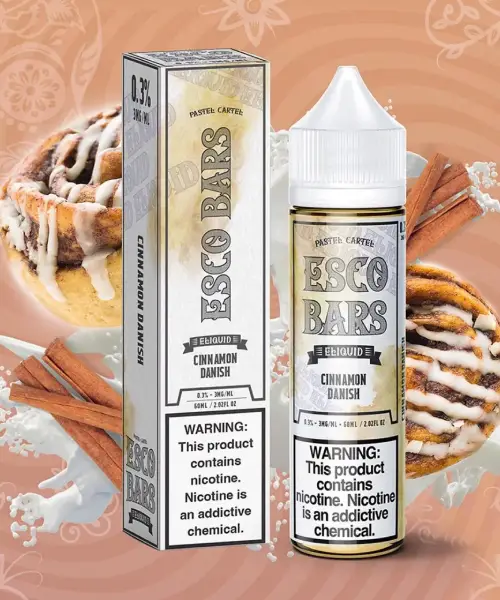
CBD tinctures are commonly presented in dropper bottles and may contain MCT, hemp seed oil, or another carrier. CBD vape oil is a different category, generally referring to liquid intended for an electronic vaporizing device. Similar branding and shared CBD terminology can cause confusion, particularly when search results use the phrase cbd oil vape without explaining the route of administration.
A label that says CBD oil does not by itself establish that the product is formulated for inhalation. Likewise, a product marketed as a vape liquid does not establish that inhaling it is harmless. Aerosolization introduces exposure considerations that differ from oral or topical products. Ingredients that are acceptable for one route may not be safe for another.
For that reason, educational comparisons should start with the formulation and its intended route rather than the name or package shape. Consumers and caregivers should not assume that a dropper bottle can be poured into a vaporizer or that a cartridge can be treated as an oral supplement. When an item is ambiguous, that ambiguity is itself an important safety concern.
What CBD pens are
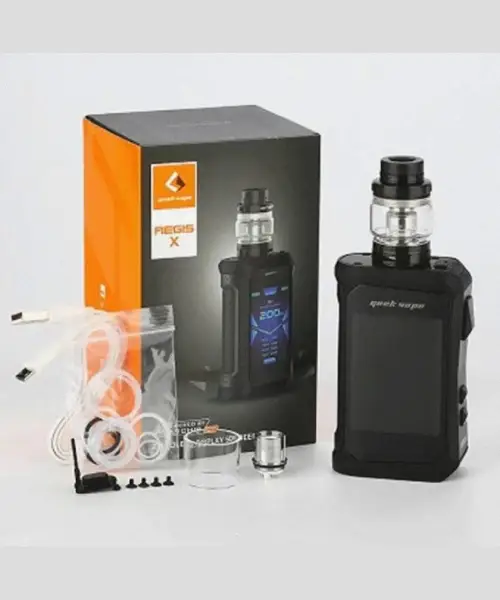
CBD pens describes a family of compact electronic devices associated with CBD-containing liquids. Some have integrated reservoirs; others connect to separate cartridges. The word pen refers to the device form factor, not a verified level of purity or a particular cannabinoid profile. A search for cbd vape pens therefore combines hardware and formulation topics.
Device design can differ in battery type, heating system, electrical controls, airflow, and enclosure. These differences can affect temperature behavior and aerosol production. The presence of a familiar cylindrical shape does not establish that two devices are interchangeable or that they have equivalent safety characteristics.
The phrase cbd oil vape pen sometimes blurs the distinction between the pen itself and its contents. Clear terminology is helpful in educational material: the battery or electronic body is hardware; the reservoir holds a formulation; the heating element produces aerosol; and the user may be exposed to both formulation constituents and substances produced by heating.
Disposable pens and environmental questions
The phrase cbd pens disposable generally refers to integrated devices designed with a limited service life. These may combine an electronic circuit, battery, heater, and liquid reservoir in one housing. Because the components are integrated, disposal creates a combined electronics and chemical-waste issue.
Lithium-containing batteries should not be placed casually into ordinary waste streams where local recycling rules prohibit it. Damaged or discarded electronic devices may create fire or contamination risks, and residual liquid can complicate handling. Disposal procedures vary by municipality, so official local guidance matters.
Marketing discussions often focus on convenience while giving much less attention to environmental impact. A more complete description considers battery sourcing, material use, packaging, electronic-waste collection, and whether components can be separated safely by authorized recyclers. No consumer should be encouraged to dismantle a battery-containing device to dispose of it.
Cartridges and their components
CBD cartridges are small reservoirs associated with compatible vaporizing hardware. A cartridge may include a mouthpiece, housing, seals, a liquid chamber, and a heating assembly. Search terms such as cbd vape cartridges and cbd oil vape cartridge refer to this category but do not identify a universal connection standard.
Materials can include metal, glass, ceramic, silicone, and plastic. Their performance and chemical stability under heating are relevant to product evaluation. An ingredient report alone may not describe emissions associated with the complete device. The heater and the liquid form a system, and studies of aerosols often depend on the exact hardware and operating conditions.
The phrase cartridge is also used for products containing nicotine, THC, or other ingredients. It is therefore important not to infer the contents from the hardware shape. A familiar appearance does not substitute for an ingredient declaration, reliable laboratory documentation, and a clear description of what a particular formulation contains.
| Term | What it refers to | Important distinction |
|---|---|---|
| CBD vape oil | A liquid formulation | Ingredients and aerosol risks matter |
| CBD pen | Electronic device | Hardware is separate from contents |
| CBD cartridge | Reservoir and heating interface | Appearance does not establish contents |
| CBD tincture | Usually an oral oil preparation | Not intended for inhalation |
Understanding compatibility without guesswork
A device and a cartridge may look similar without being mechanically or electrically compatible. Connection geometry, resistance, power delivery, and manufacturer specifications vary. Discussions of cbd oil vape cartridge compatibility should acknowledge that mismatched components can cause malfunction, leakage, overheating, or device damage.
A product category description can explain that hardware compatibility exists as a technical issue without providing instructions for assembling or using vaping equipment. Manufacturer documentation and independent safety information are more meaningful than assumptions based on photographs or broad claims that a component fits everything.
Compatibility is not simply a question of whether two pieces can be physically connected. Electrical characteristics and operating temperature can also affect aerosol composition. For health-focused readers, the central point is that no configuration should be assumed safe merely because it is popular, inexpensive, or frequently discussed online.
CBD concentrations and label arithmetic
CBD concentrations may be described using milligrams, milligrams per milliliter, percentages, or total content per package. These figures represent different measurements. A package stating a total milligram amount is not necessarily describing the concentration of each portion of liquid.
For example, the same total amount of CBD can be distributed across different volumes, producing different concentrations. Conversely, two similarly sized reservoirs can contain different amounts of CBD. Comparing labels therefore requires understanding what quantity each number actually describes. These are measurement concepts, not recommendations about consumption.
Labels may also report total cannabinoids rather than CBD alone. A high total-cannabinoid number should not be interpreted as an equivalent CBD amount. Laboratory reports may present values in mass fractions or other units, making it important to read column headings carefully. The most responsible educational treatment explains the units without suggesting a target strength or dose.
Full-spectrum, broad-spectrum, and isolate
Full-spectrum, broad-spectrum, and isolate are common descriptions in CBD-related discussions. Full-spectrum generally indicates a mixture of cannabinoids and other plant-derived compounds, potentially including THC. Broad-spectrum often describes a mixture processed to reduce or remove THC, while isolate refers to relatively purified CBD.
These labels are not substitutes for independent measurements. A full-spectrum formulation may vary substantially from another full-spectrum formulation. Broad-spectrum is not a universal guarantee of zero detectable THC, and isolate-based products can still contain other ingredients once made into a finished liquid.
The concept sometimes called the entourage effect is widely discussed, but evidence about specific combinations and outcomes is still developing. A label category alone does not prove a clinical benefit. For readers comparing product terminology, the useful distinction is chemical composition, not an implied ranking of effectiveness.
CBD and THC are not the same compound
CBD and THC are chemically related cannabinoids but differ in their pharmacological profiles. THC is associated with intoxicating effects, while CBD is generally described as non-intoxicating. Nevertheless, CBD can produce adverse effects and interact with medications; non-intoxicating does not mean risk-free.
A product described as CBD may still contain THC or other cannabinoids. The quantity can depend on the starting material, manufacturing process, and accuracy of labeling. Because trace or unexpected THC may be relevant to drug testing, legal classification, or individual health, broad marketing language is insufficient.
The phrase hemp-derived is also not a complete safety assessment. Hemp is a legal and agricultural classification in certain contexts, not proof that every derivative is suitable for inhalation. The composition of the finished material and the applicable regulations remain important.
Why third-party laboratory reports matter
A Certificate of Analysis, often abbreviated COA, is a laboratory document that can report the identity and quantity of measured compounds. Independent testing is particularly relevant where labeling accuracy is uncertain. A COA may list CBD, THC, other cannabinoids, and a variety of screened contaminants.
A report should be interpreted in context. The date, laboratory identity, sample identifier, product name, batch number, measurement method, and detection limits can all affect how useful the document is. A generic laboratory certificate that cannot be tied to a specific formulation may provide limited assurance.
Testing can reduce uncertainty, but it does not make inhalation risk-free. A report measuring cannabinoids and certain contaminants does not necessarily evaluate the aerosol produced by a heating device. The distinction between liquid chemistry and inhaled emissions is essential when interpreting safety claims.
Reading a laboratory report: Look for the sample identity, laboratory, date, cannabinoid results, contaminant panel, and limits of detection. A COA does not establish that inhalation is harmless.
Contaminants and the limits of testing
Cannabis-related materials may be screened for pesticides, heavy metals, residual solvents, and microbial contaminants. The relevance of a particular screen depends on the product and manufacturing process. An absent contaminant on one report does not mean every possible hazardous substance was assessed.
Heavy metals can arise from agricultural inputs or, in some contexts, from hardware components. Residual solvents can be associated with processing. Microbial contamination and chemical degradation raise additional concerns. Different laboratories may use different analytical panels and reporting limits.
Readers should be cautious about absolute language such as completely safe, toxin-free, or medically approved when the supporting evidence is limited. The scientific meaning of a laboratory result is narrower: particular analytes were tested in a particular sample using stated methods. That is valuable information, but it is not a universal health guarantee.
Heating, aerosols, and respiratory exposure
Vaping devices produce aerosols by heating a liquid or other formulation. The resulting aerosol is not simply harmless water vapor. It can contain substances from the original liquid, transformation products formed during heating, and potentially particles or metals associated with device components.
Research on respiratory effects continues to evolve, and long-term evidence for CBD-specific vaping formulations is limited. Findings from nicotine or THC vaping research cannot always be applied directly to every CBD formulation, but they highlight the importance of inhalation exposure as a separate scientific question.
People with respiratory conditions, adolescents, and pregnant individuals warrant particular caution. Public-health authorities emphasize that vaping is not risk-free. A well-designed informational article should present these uncertainties prominently instead of treating the absence of smoke as proof of safety.
Why ordinary oils should not be inhaled
Some CBD products are mixed with edible carrier oils such as MCT oil, coconut-derived oils, or hemp seed oil. These may appear in oral formulations, but that does not make them appropriate for aerosolization. Inhaling oily substances can pose serious pulmonary risks.
The similarity of packaging and the shared word oil create a recurring misunderstanding. The terms CBD oil, CBD vape oil, and hemp seed oil should be explained as separate concepts. A label or website that fails to distinguish them leaves readers without crucial safety information.
The responsible message is straightforward: do not put ordinary tinctures, cooking oils, or homemade mixtures into vaping devices. It is also important not to assume that products marketed specifically for vaping have established long-term safety. Different formulations and routes carry different evidence and uncertainties.
Flavorings and other additives
Flavorings can make product descriptions more complicated. A substance approved or commonly used in food is not automatically established as safe to inhale. Oral consumption and respiratory exposure involve different tissues and different toxicological questions.
Other additives may be included for viscosity, stability, or sensory properties. Their names and functions should be transparent. A complete ingredient list helps readers identify what is known, while gaps in labeling can make it difficult to interpret potential exposure.
The safety of a finished aerosol cannot be inferred solely from the safety profile of its separate ingredients. Heating can alter compounds and generate new products. This is one reason why independent emissions research and careful regulatory oversight remain important.
Product names and search terminology
Search phrases such as best cbd vape oil, best cbd vape pens, and best cbd brand pens appear frequently in keyword research. These phrases imply rankings, but rankings often depend on subjective criteria or commercial incentives rather than comparable scientific evidence.
An informational guide can address what such searches mean without declaring a particular product best. Useful evaluation dimensions include transparent labeling, evidence quality, device materials, and the presence or absence of unsupported health claims. None of these eliminates the risks of inhalation.
Brand-specific queries, including airopro cbd cartridges or cross country cbd cartridges, should not be treated as proof of current inventory or product characteristics. Brand formulations, names, and legal status can change. Without verified product-specific documentation, neutral category descriptions are more reliable than invented specifications or endorsements.
Questions about anxiety and pain
Searches such as cbd vape pens for anxiety and best cbd vape pens for anxiety reflect genuine questions about mental health and CBD. However, a search trend is not clinical evidence. Vaped CBD products are not established treatments for anxiety disorders, and advertisements suggesting guaranteed relief can mislead people who need appropriate care.
Similarly, CBD products should not be presented as proven treatments for pain or other medical conditions without evidence and authorization for the particular indication. Research into cannabinoids is ongoing, but outcomes vary by compound, formulation, condition, and study design.
People experiencing persistent anxiety, pain, or other symptoms should seek guidance from qualified healthcare professionals. CBD can interact with some medications and may have adverse effects. A retail article should not replace medical assessment or imply that a vaping product is a suitable substitute for evidence-based treatment.
FDA regulation and approved medicines
In the United States, the Food and Drug Administration regulates drugs and other product categories under different frameworks. The existence of an FDA-approved prescription CBD medicine does not mean that commercially marketed CBD vape products have received equivalent approval.
An approved pharmaceutical product has undergone evaluation for specific indications and conditions of use. Commercial products using the same cannabinoid name may differ substantially in purity, formulation, administration route, and supporting clinical evidence. These distinctions are central to accurate health communication.
The FDA has also expressed concerns about unapproved CBD products, misleading therapeutic claims, potential liver injury, and drug interactions. Readers should distinguish an ingredient that has been studied from a particular retail product that has not been evaluated for the same purpose.
California regulatory context
California has distinct rules governing cannabis retailers, hemp-derived products, and tobacco or vaping businesses. A general smoke-shop business license does not by itself establish permission to sell every cannabis category. Authorization depends on the relevant license and current state and local requirements.
Sal’s Tobacco & More has been described by the business as a licensed Central California retailer with in-store identity verification and cash payments. Those operating details are distinct from claims about any specific branch’s inventory. Product availability and authorization can vary across locations and categories.
California regulations can change, and readers should consult the Department of Cannabis Control, the California Department of Public Health, and applicable local authorities for current requirements. Educational content should avoid suggesting that internet listings or broad federal hemp definitions override state restrictions.
Age verification and youth protection
Age and identity checks are important elements of regulated retail systems. Requirements depend on the product and jurisdiction, and they may differ between tobacco, vaping, hemp-derived, and cannabis categories. Business policies should reflect the relevant legal obligations.
Youth vaping raises particular public-health concerns. Nicotine exposure can affect the developing brain, and inhaling non-nicotine aerosols is not automatically safe. Product packaging and flavor descriptions can also influence youth appeal, making responsible marketing and secure storage important.
For Sal’s Tobacco & More, the website’s age verification policy is an appropriate internal reference for readers seeking information about the company’s stated rules. An article should not provide ways around age checks or suggest that identification requirements are optional.
The difference between online information and in-store operations
Searches for cbd oil for vape near me and cbd pens disposable near me often express location-related interest. They do not establish what any particular store currently stocks or whether a product can legally be sold in that location. Search-engine wording and actual retail authorization are separate matters.
Likewise, online product descriptions do not necessarily imply online checkout, interstate shipment, or delivery. In this project, the business has described its relevant sales model as in-store, with cash payments and required identification. Educational pages should not invent an e-commerce fulfillment model.
A useful local article can describe the business’s locations, hours, history, and general categories while keeping regulatory and health information distinct. This supports accurate local context without promising particular products or encouraging age-restricted transactions.
Sal’s Tobacco & More in Central California
Sal’s Tobacco & More is described as a regional chain serving communities in Central California, with a history dating to 2009. Its identity centers on smoke-shop, vape, and glassware retail, and the business has provided details for three locations in Dinuba and Hanford.
The Dinuba location is listed at 647 W El Monte Way, with hours of 9:00 AM to 9:00 PM daily. The downtown Hanford location is listed at 110 N 11th Ave, with hours of 8:00 AM to 10:00 PM Monday through Saturday and 8:00 AM to 9:00 PM Sunday. The North Hanford location is listed at 2563 N 11th Ave, with hours of 9:00 AM to 10:00 PM Monday through Saturday and 9:00 AM to 9:00 PM Sunday.
These details provide local context for readers in Dinuba, Hanford, Reedley, and surrounding Central Valley communities. Hours and operational details may change, so the business’s contact information is the appropriate reference for current location information. Nothing in these location descriptions should be interpreted as a claim that identical regulated inventory is available at all three stores.
Business context: For current store details, refer to the contact page. For stated customer eligibility rules, consult the age verification policy.
Store reputation and the limits of testimonials
The business describes its staff as knowledgeable and its stores as clean and well stocked. Customer testimonials can help explain experiences with service, atmosphere, and store organization, but they should not be used as clinical evidence about CBD or vaping safety.
A positive review about staff courtesy is different from a verified laboratory result. Similarly, a customer’s personal report about a health outcome cannot establish that a product treats a medical condition. Keeping these categories separate protects readers from confusing anecdote with evidence.
For a locally focused article, links to the business’s About Us, Contact Us, and Testimonials pages can help readers understand its identity and publicly presented service information. They should be used in context rather than repeated unnaturally for search-engine purposes.
Interpreting search volumes responsibly
Keyword spreadsheets commonly include search volume, intent, and difficulty estimates. These metrics describe search behavior, not scientific validity. A high-volume query may reflect curiosity, confusion, health concerns, or commercial interest, and its wording may be imprecise.
For example, cbd vape oil, cbd pens, and cbd cartridges may overlap in search results even though they refer to different objects. Other queries may include brand names or medical conditions. An effective informational article groups those terms by meaning rather than repeating every variation in unrelated paragraphs.
The goal of responsible search optimization is to answer the underlying question clearly. Headings should correspond to substantive explanations, and exact-match phrases should be used only where they help readers recognize the topic. Excessive repetition can reduce clarity and make an article less trustworthy.
Questions to ask about labeling
A useful product description should disclose the cannabinoid identity, the amount and units used, the ingredient list, the intended product category, and the manufacturer or responsible company. It should not rely on vague terms such as premium or pure without explaining what they mean.
A batch number and accessible laboratory report can make documentation easier to interpret. However, a label is still a manufacturer statement, and a laboratory report is a sample-specific result. Neither is a guarantee of universal safety.
Warning language, age restrictions, and legally required disclosures should be readable. If important details are hidden behind decorative graphics or difficult-to-access links, the presentation can make meaningful evaluation harder. Transparent communication is particularly important for products associated with respiratory exposure.
Packaging, storage, and household exposure
Cannabinoid-containing liquids and electronic devices should be stored securely away from children and pets. Colorful packaging and small components can create accidental-exposure risks, and batteries can present additional hazards if damaged or exposed to heat.
Labels should remain attached and legible. Transferring a liquid into an unmarked container can remove essential identification and warning information. Household members may otherwise mistake it for another substance.
If accidental exposure occurs, contact appropriate medical or poison-control services. Do not rely on an online product description to assess the seriousness of an exposure. Storage guidance is a safety topic, not an endorsement of use.
Batteries and device-related hazards
Vaping devices often contain rechargeable lithium-ion batteries. Battery failures can result from defects, physical damage, inappropriate charging equipment, or heat exposure. The hazards are not unique to CBD products, but they are relevant whenever an electronic heating device is discussed.
A device that is swollen, leaking, unusually hot, or visibly damaged warrants caution. Users should not attempt improvised repairs or modifications. Manufacturer safety notices and local electronic-waste guidance are more appropriate references than informal internet demonstrations.
Educational articles can explain battery risks without providing operational instructions for vaping. This distinction helps readers understand the equipment category while avoiding the suggestion that correct battery handling eliminates the separate health concerns associated with inhaled aerosols.
Environmental impact of electronic vapor products
Electronic vapor devices combine plastics, metals, electronic circuits, batteries, and chemical residues. Their production and disposal contribute to material use and waste-management challenges. Single-use formats can intensify these concerns because electronic components are discarded after a relatively short service life.
Environmental assessment should consider the complete lifecycle, including raw-material extraction, manufacturing, transportation, packaging, and end-of-life management. A product described as compact or convenient is not necessarily environmentally preferable.
Local governments and waste-management agencies may publish specific instructions for battery-containing products. Improper disposal can create risks for waste workers and recycling infrastructure. Consumers should not dismantle devices in an attempt to separate hazardous components.
Research gaps and long-term uncertainty
CBD research covers multiple routes of administration, formulations, and populations. Evidence from oral prescription CBD cannot be directly translated into conclusions about inhaled retail formulations. Different routes can produce different exposure patterns and adverse-effect profiles.
Long-term studies of CBD-specific vaping products remain limited. Formulations and hardware change rapidly, which can make older findings difficult to generalize. This uncertainty should be stated plainly instead of being treated as a temporary inconvenience to be ignored.
An accurate guide can explain what is known, what remains uncertain, and why a laboratory report or familiar brand name does not close every evidence gap. Readers deserve that distinction even when a page is organized around product-category terminology.
Responsible comparisons across product categories
A comparison between a CBD pen, a CBD cartridge, and CBD vape oil is most useful when it distinguishes the physical device from the formulation. The pen is an electronic system; the cartridge is a container and heating interface; and the liquid is a chemical mixture.
These categories interact, but they should not be collapsed into one item. A cartridge may be sold as a component, while a disposable device integrates multiple components. A liquid may be discussed independently of any specific device.
Comparison tables can help readers understand these distinctions without ranking products or recommending one for use. The most important takeaway is that each category raises its own questions about composition, hardware, regulation, environmental impact, and respiratory exposure.
Common misconceptions about CBD vaping
One misconception is that CBD is harmless because it is non-intoxicating. Another is that a hemp-derived product is automatically lawful everywhere. A third is that a clean-looking liquid must be free of contaminants. None of these assumptions is reliable.
A fourth misconception is that a COA guarantees the safety of an inhaled aerosol. Laboratory testing is useful, but its scope depends on what was tested. A fifth is that a familiar device shape proves compatibility or quality. Hardware appearance is not a substitute for technical evidence.
Finally, the phrase natural does not mean medically approved. Natural substances can have side effects, interact with medicines, or become hazardous when heated. Good educational content avoids simplistic reassurance and makes the limitations of each claim clear.
Further reading and topic connections
The Sal’s Tobacco & More website contains informational posts on CBD terminology, vape hardware, cartridges, and cannabis-related regulations. Internal links are most helpful when they lead to a genuinely related explanation rather than simply increasing the number of links on a page.
For example, a reader seeking a definition of a vape cartridge may benefit from a general cartridge explainer, while a reader researching cannabinoids may benefit from an informational CBD page. Links to company policies and location information serve a different purpose: they explain the business rather than the science.
This article therefore separates internal resources into business information, technical background, and cannabinoid education. Readers should interpret all such content alongside current official health and regulatory guidance, especially when a topic involves medical claims, age restrictions, or changing California rules.
CBD Vape Oil, Pens, and Cartridges: Frequently Asked Questions
What is CBD vape oil?
The term generally describes a CBD-containing liquid associated with an electronic aerosol device. It does not identify a single standardized formulation or prove that inhalation is safe.
Is CBD oil the same as CBD vape oil?
No. CBD oil may refer to oral tinctures or other preparations. Ordinary oil-based tinctures should not be inhaled.
What are CBD vape pens?
They are electronic devices associated with CBD-containing formulations. Device design and formulation are separate considerations.
What are CBD cartridges?
They are reservoirs or assemblies used with compatible electronic hardware. Cartridge appearance alone does not identify its contents.
Are CBD cartridges and THC cartridges the same?
No. The compounds differ, and products can have different contents and regulatory classifications.
Do CBD pens contain nicotine?
The term CBD pen does not establish whether nicotine is present. An ingredient statement and reliable testing are necessary to assess a particular formulation.
Are CBD vape pens safe?
No inhaled aerosol should be assumed risk-free. Evidence about long-term CBD vaping exposure is limited.
Can CBD vaping help anxiety?
Vaped CBD is not an established treatment for anxiety disorders. A qualified healthcare professional is the appropriate source of guidance.
Can CBD vaping treat pain?
CBD vaping should not be presented as a proven treatment for pain. Medical claims require evidence and relevant regulatory authorization.
What does full-spectrum CBD mean?
It generally describes a mixture containing CBD and other hemp-derived compounds, potentially including THC. Exact composition must be assessed separately.
What is broad-spectrum CBD?
It generally refers to a mixture of cannabinoids processed to reduce or remove THC, but the label alone is not a guarantee of zero THC.
What is CBD isolate?
CBD isolate refers to relatively purified CBD. A finished product containing isolate may also contain other ingredients.
What is a COA?
A Certificate of Analysis is a laboratory report documenting particular measurements for a sample or batch.
Does a COA prove vaping is safe?
No. A COA may measure liquid ingredients and contaminants without evaluating the complete aerosol or long-term health effects.
Can ordinary CBD tincture be used in a vape device?
No. Oil-based tinctures and edible carrier oils are not appropriate for inhalation.
Does hemp-derived mean legal in every state?
No. Federal, state, and local rules differ, and California has product-specific restrictions.
What does cbd oil vape pen starter kit mean?
It is a search phrase referring to a device package or category; it does not establish compatibility, quality, or safety.
What does 100 cbd vape oil mean?
The phrase is ambiguous without units and context. It may refer to a percentage claim or another marketing convention and should not be assumed to describe a verified composition.
Are disposable CBD pens environmentally harmless?
No. They can contain batteries, electronics, plastics, and residual chemicals that require appropriate waste handling.
Does Sal’s Tobacco & More have locations in Dinuba and Hanford?
The business has provided addresses for one Dinuba location and two Hanford locations. The Contact Us page is the appropriate source for current details.
Does a search for cbd cartridges near me prove local availability?
No. Search queries do not establish inventory, legal authorization, or availability at any specific branch.
Where can I read Sal’s age policy?
The website publishes an Age Verification Policy explaining the business’s stated requirements.
Can product reviews prove a health benefit?
No. Testimonials describe individual experiences and do not replace controlled clinical evidence.
Why do CBD labels use milligrams?
Milligrams describe a mass quantity. Total package content and concentration are different measurements.
Can CBD interact with medications?
Yes. CBD may interact with certain medications. Consult a qualified healthcare professional about personal medical questions.
Related Sal’s Tobacco & More Pages and Educational Posts
These links provide business information or related educational background. They are not endorsements of vaping or directions to purchase age-restricted products.
- About Sal’s Tobacco & More
- Age verification policy
- Contact information
- Testimonials
- CBD terminology and local information
- Vape cartridge explainer
- CBD vape juice overview
- CBD vape oil, pens and cartridges background
- Vape pen terminology
- Vape pod systems
- Battery safety background
- THC vape oil legal overview
- Refund and returns policy
Public-health and regulatory sources
Clarity matters more than marketing claims
CBD vape oil, pens, and cartridges are different product categories with different scientific, technical, and regulatory considerations. Transparent terminology, cautious interpretation of testing, and recognition of respiratory risks are essential.
Learn more about the business through the About Us page or its Contact Us page.
This article is general educational information, not medical or legal advice. It does not endorse CBD vaping, recommend devices, or establish the safety or legality of a specific product.